CT Scan

What is a CT Scan?

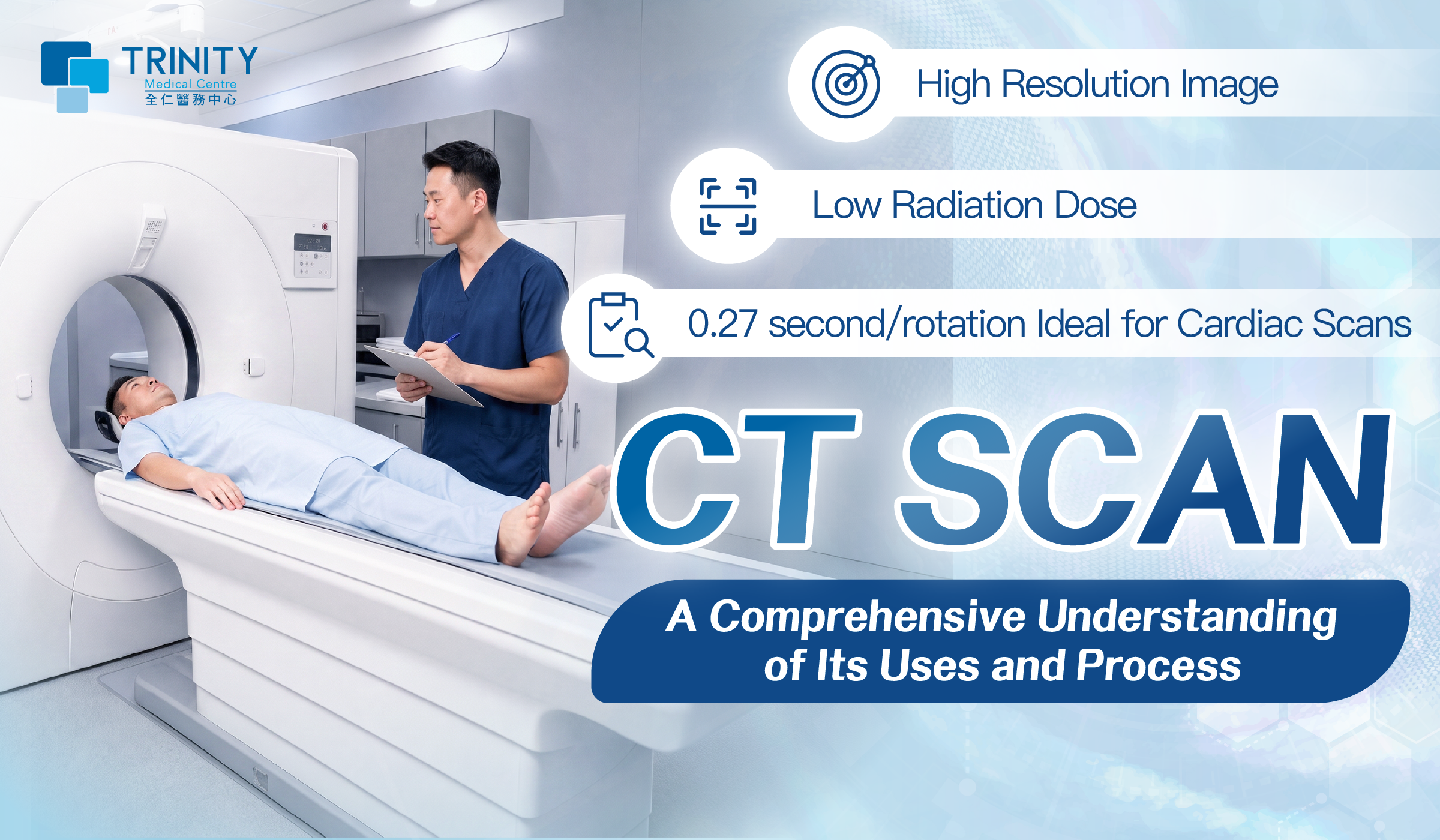
Computerized Tomography, CT Scan meaning in short, is a sophisticated technology that can produce a series of cross-sectional images of the human body. A CT scan uses a circle of X-rays and computer analysis to create multiple images of the inner body. It is suitable for analyzing inner-body structures, including organs, bones, soft tissues, and blood vessels. CT scans produce clearer images than regular X-ray examinations.


CT Scans can diagnose infectious disease, cardiovascular disease, musculoskeletal disorders, trauma, and cancers. Experienced radiologists will interpret the resulted images and write diagnostic reports after scans.

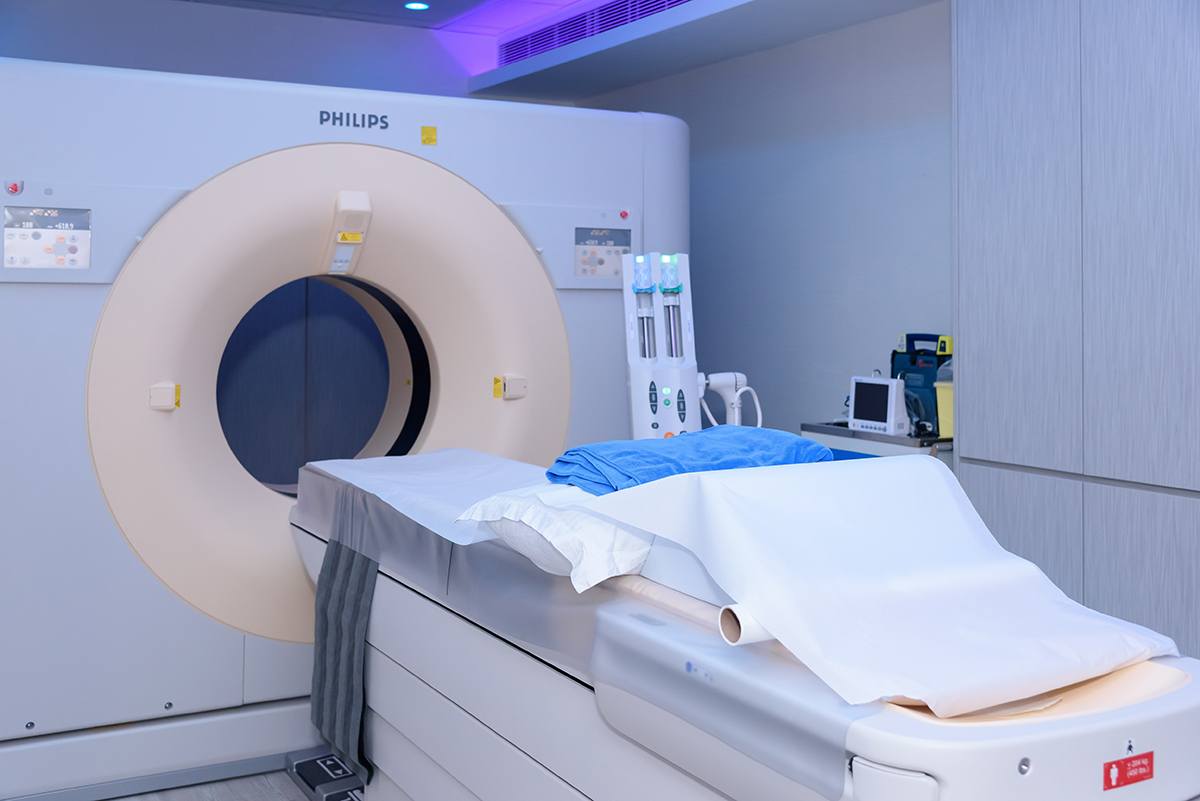
Why Choose the Philips 256-Slice CT Scanner?

  • Combines high accuracy with exceptional safety — one of only four such machines available in Hong Kong
  • IMR (Iterative Model Reconstruction) — significantly reduces radiation dose and image noise during examinations
  • Wide NanoPanel Elite CT detector — shortens scanning time and greatly improves image quality
  • O-MAR (Orthopaedic Metal Artefact Reduction) — effectively eliminates metal artefacts caused by orthopaedic implants
  • Ultra-high scanning speed of one rotation every 0.27 seconds — particularly suitable for cardiac scans
  • Ultra-low contrast resolution of 2mm @ 0.3% — meaning an extremely low radiation dose while still delivering high-resolution images
CT Scan

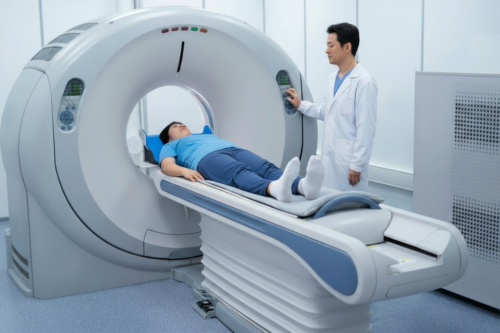
The radiographer will ask the patient to lie close to the scanner’s gantry and remain in a supine (lying flat) position.

Computed Tomography (CT)

Cardiac CT Angiography (CTCA)
Using state-of-the-art Cardiac CT Angiography (CTCA) scanning, doctors can accurately track calcium deposits in atherosclerotic plaques or fatty deposits in your coronary arteries. This helps in the early identification of vascular stenosis, vascular occlusion, aneurysms, and other potential vascular problems, allowing for early prevention of heart disease.

Key Screening:

  • Coronary Artery Disease (CAD) / Coronary Heart Disease
  • Acute Coronary Syndrome Integrated Assessment
Low-dose Lung CT (LDCT)
Low-dose Lung CT (LDCT) scans are used to screen for early lung cancer or observe chronic lung diseases. Detect lung nodules smaller than 1 cm, emphysema, lung cysts, and other diseases, effectively reducing lung cancer mortality. It is suitable for smokers or former smokers, those with a family history of lung cancer, those frequently exposed to asbestos or dust, or those who need to track small lung nodules.

Key Screening:

  • Lung Cancer
  • Benign Lung Lesions

Trinity Medical Centre: Advanced Scans for Your Body’s Future Dataset

Trinity Medical Centre is proud to introduce Magnetic Resonance Imaging (MRI) and Computed Tomography (CT) health check plans covering the head, neck, lungs, heart, abdomen, pelvis, and spine. Utilizing state-of-the-art diagnostic imaging technology, our precise analysis evaluates risks for early-stage cancers, stroke, cardiovascular diseases, and other critical illnesses.

MRI and CT scans provide a comprehensive look inside your body, giving you control over your body’s future health data.

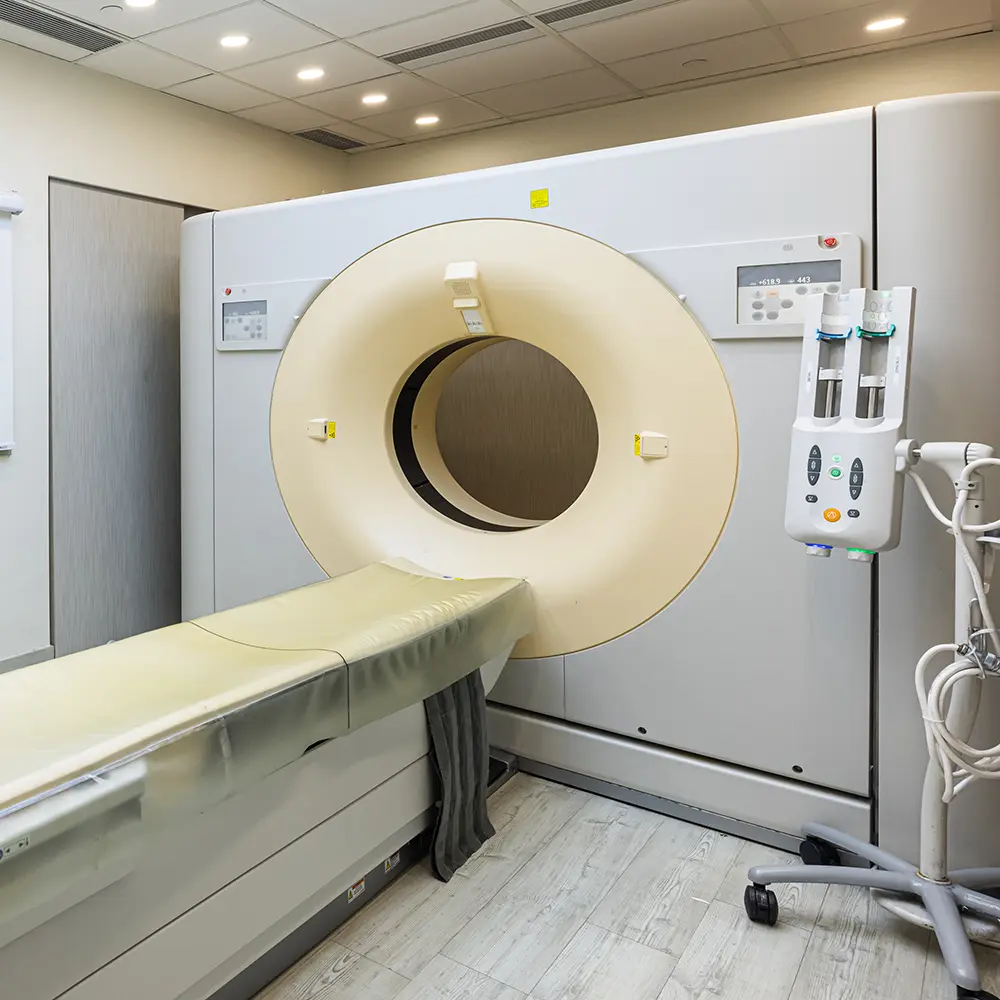
Why 256-Slice Computed Tomography – Philips iCT Elite ?

Trinity is one of 4 medical service providers in Hong Kong using this machine. Philips iCT Elite provides superb low radiation dose and high-resolution examination with premium results. Its ultra-fast rotation time (0.27 seconds per rotation) can shorten the examination time, especially for cardiac scan patients. Equipped with the latest O-MAR technology, metal artefacts related to orthopaedic implants can also be reduced significantly.

Advantages of 256-Slice Computed Tomography – Philips iCT Elite

  • Iterative Model Reconstruction Technology (IMR) – both radiation dose and image noise reduction in all types of exam
  • Wide NanoPanel Elite CT detector – for shorter scan time and improved image quality
  • Metal Artifact Reduction for Orthopaedic Implants Technology (O-MAR)
  • Ultra fast rotation time 0.27 seconds/rotation
  • Superb low-contrast resolution 2mm @ 0.3%

How is a CT Scan done?

The ct technician will ask the client to lie flat near the scanner gantry.

If your scan involves the abdomen or pelvis, you will be required to drink an oral contrast solution for the stomach and intestines to show more clearly in the images.

In some cases, intravenous (IV) injection of contrast agent will be required, which is typically injected into the vein on your hand. You may feel hot and sense a metallic taste in your mouth after accepting the IV injection. These sensations are normal and will disappear within a minute.

When the exam table moves slowly into the scanner, you are required to remain motionless during the whole scanning procedure. Sometimes, our ct technicians will instruct you to hold your breath for the need of specific studies. The CT scan procedure typically lasts for 10-45 minutes. The exact time varies for different body parts.

What to notice afterwards

In most cases, you will be able to go home on your own after completing the scan. But if you have taken an IV injection and found any redness, swelling, hotness, or pain in your skin, please tell our physician immediately.

The ct technician will send a wet film and written report after the scan.

Applications of Computerize Tomography Scan (CT Scan)

CT scans have a wide range of applications in the medical field, covering various areas from neuroscience to surgical procedures. Here are some major application areas:

  1. Neuroscience: CT scans can be used to diagnose brain diseases, such as brain tumors, strokes, brain hemorrhages, and traumatic brain injuries. They also help assess brain structure and function, providing guidance for treatment.
  2. Cardiovascular Diseases: CT scans can clearly show the structure of the heart and blood vessels, aiding in the diagnosis of coronary artery disease, myocardial infarction, aneurysms, and other cardiovascular conditions.
  3. Pulmonary Diseases: CT scans are important tools for diagnosing lung cancer, pulmonary infections, and other lung diseases. They can reveal details of the lungs, including nodules, masses, and other abnormalities.
  4. Abdominal Diseases: CT scans can be used to examine abdominal organs such as the liver, gallbladder, pancreas, and kidneys, helping to diagnose tumors, stones, and other conditions.
  5. Bone and Joint Diseases: CT scans can clearly show the structure of bones and joints, making them commonly used for diagnosing fractures, arthritis, and other bone diseases.
  6. Trauma Assessment: In cases of severe trauma, CT scans can quickly assess the extent of internal organ damage, providing guidance for emergency treatment.
  7. Surgical Planning: CT scans provide crucial anatomical information for surgeries, helping surgeons better plan the surgical process.

Whether for diagnosis or treatment, CT scans play an indispensable role and have become one of the essential diagnostic tools for physicians.

All-In-One Plan For A Full Body Scan
Top Choice For Comprehensive Health Screening

Bestseller

CT Scan

CT Whole Abdomen

Key Screening

  • Tumors and Cancers
  • Neurological Diseases
  • Cerebrovascular Disease
  • Musculoskeletal Diseases
  • Visceral Organ Diseases
  • Vascular and Lymphatic Abnormalities
  • Infections or Inflammations
  • Congenital Diseases or Developmental Abnormalities
  • Stroke Risk
  • Coronary Artery Disease (Heart Disease)
  • Acute Coronary Syndrome Integrated Assessment
  • Myocardial disease
  • Cardiac Structural Abnormalities
  • Lung Cancer
  • Benign Lung Lesions
  • Cancer Marker
  • Thyroid Screening
Advanced
CT Scan

Whole-body MRI
MRI Stroke Screening

Key Screening

  • Tumors and Cancers
  • Neurological Diseases
  • Cerebrovascular Disease
  • Musculoskeletal Diseases
  • Visceral Organ Diseases
  • Vascular and Lymphatic Abnormalities
  • Infections or Inflammations
  • Congenital Diseases or Developmental Abnormalities
  • Stroke Risk
  • Coronary Artery Disease (Heart Disease)
  • Acute Coronary Syndrome Integrated Assessment
  • Myocardial disease
  • Cardiac Structural Abnormalities
  • Lung Cancer
  • Benign Lung Lesions
  • Cancer Marker
  • Thyroid Screening
Premium
CT Scan

Whole-body MRI
Cardiac CT Angiography (CTCA)
Low-dose Lung CT (LDCT)

Key Screening

  • Tumors and Cancers
  • Neurological Diseases
  • Cerebrovascular Disease
  • Musculoskeletal Diseases
  • Visceral Organ Diseases
  • Vascular and Lymphatic Abnormalities
  • Infections or Inflammations
  • Congenital Diseases or Developmental Abnormalities
  • Stroke Risk
  • Coronary Artery Disease (Heart Disease)
  • Acute Coronary Syndrome Integrated Assessment
  • Myocardial disease
  • Cardiac Structural Abnormalities
  • Lung Cancer
  • Benign Lung Lesions
  • Cancer Marker
  • Thyroid Screening
Comprehensive
CT Scan

Whole-body MRI
MRI Stroke Screening
Cardiac CT Angiography (CTCA)
Low-dose Lung CT (LDCT)

Key Screening

  • Tumors and Cancers
  • Neurological Diseases
  • Cerebrovascular Disease
  • Musculoskeletal Diseases
  • Visceral Organ Diseases
  • Vascular and Lymphatic Abnormalities
  • Infections or Inflammations
  • Congenital Diseases or Developmental Abnormalities
  • Stroke Risk
  • Coronary Artery Disease (Heart Disease)
  • Acute Coronary Syndrome Integrated Assessment
  • Myocardial disease
  • Cardiac Structural Abnormalities
  • Lung Cancer
  • Benign Lung Lesions
  • Cancer Marker
  • Thyroid Screening

How to Book Your Health Check

  1. Book Online

    After successfully purchasing a health check plan, you will receive a confirmation email.

  2. 1:1 Appointment Service

    Trinity Health Consultant will contact you to personalize your booking.

  3. 1 Day Check-up

    All examination procedures, including body scans, will be completed within the same day.

  4. Doctor Consultation

    A detailed report explanation will be arranged with a doctor, offering personalized insights into your health data.

FAQ

What is a CT Scan?

A CT scan uses X-rays to create detailed cross-sectional images of the body. It captures multiple X-ray images from different angles and processes them using computer algorithms to generate high-resolution images of internal structures.

What are the main applications of CT scans in medicine?

CT scans are widely used in various medical fields, including:

  • Neuroscience: Diagnosing brain tumors, strokes, and traumatic brain injuries.
  • Cardiovascular Diseases: Assessing the structure of the heart and blood vessels.
  • Pulmonary Diseases: Diagnosing lung cancer and infections.
  • Abdominal Diseases: Evaluating organs such as the liver and kidneys.
  • Trauma Assessment: Rapidly assessing internal injuries in emergency situations.

What are the advantages of CT scans?

  • High-resolution images.
  • Short scanning time.
  • Ability to capture images from multiple angles.
  • High tissue contrast, aiding in the identification of abnormalities.
Hide
Select a method
WhatsApp We are here to serve you

You can chat with us in real-time here to inquire about health and disease information and book services. Please enter your name and accept our Terms of Service and Privacy Policy to begin.

24/7 On Call