Description
Trinity Premium MRI & CT Health Screening
(Include Whole-body MRI, MRI Stroke Screening, Coronary Angiogram & Calcium Score and Low-dose Lung CT Scan)
Looking for the most comprehensive and advanced health check-up plan? Trinity Premium MRI & CT Health Screening (Include Stroke Screening) is your best choice. Using high-end equipment MRI and CT Scan combined with comprehensive testing, it’s suitable for all age groups, especially as the preferred option for annual physical examinations.
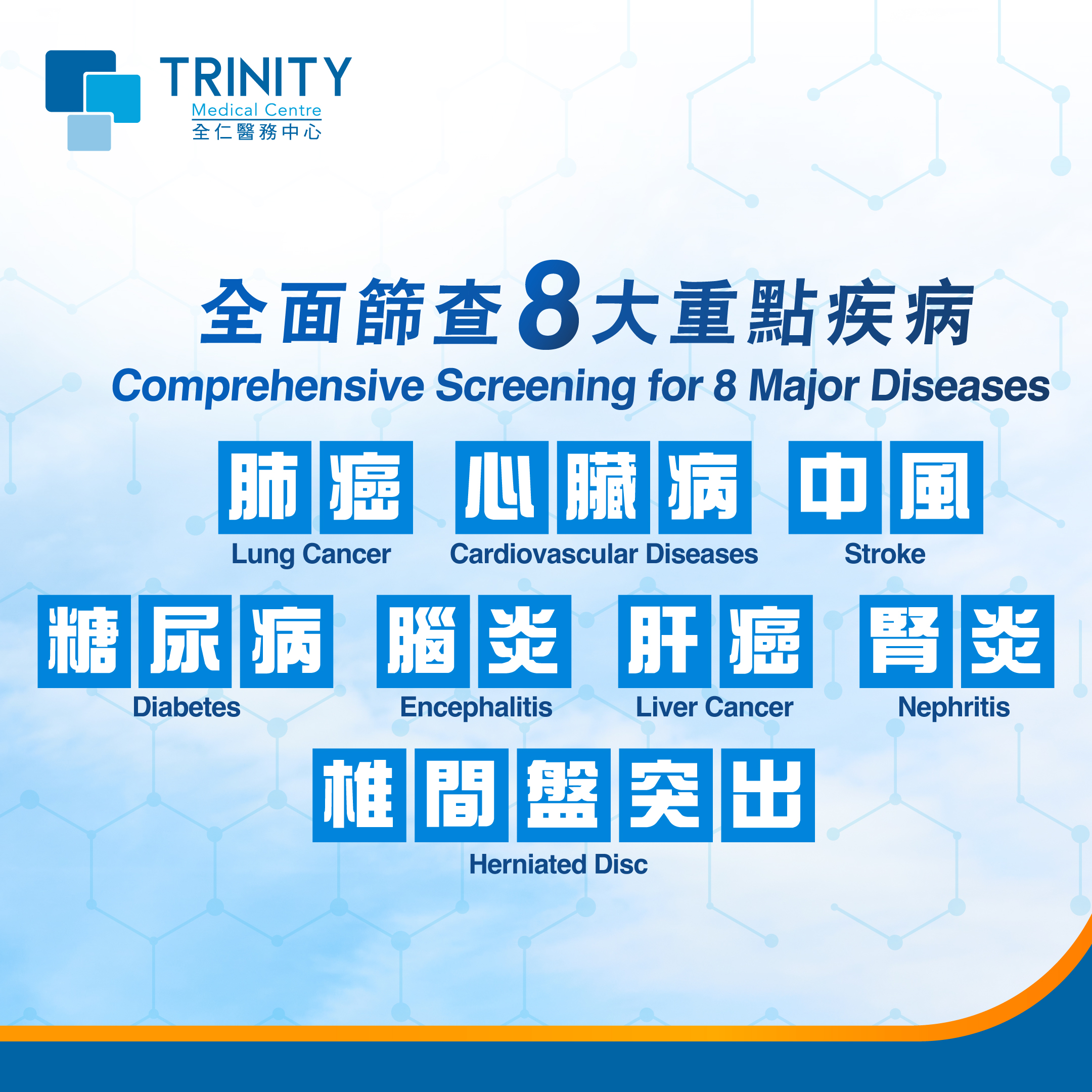
- Comprehensive Screening: A single scan covering the head, heart, lungs, liver, kidneys and spine to detect hidden tumors, organ issues, herniated discs and other health conditions.
- Stroke Screening: Utilizes MRI technology for precise detection of cerebrovascular abnormalities, enabling early identification of stroke risk.
- High precision: Combining the advantages of MRI and CT Scan for all-round detection
- Early diagnosis: Early detection of potential health issues
- Personalized plan: Customized examination plan based on your needs
Health Check-up Plan Details:
Instructions for use:
- The offer can only be used on or before the expiration date
- Please show your confirmation information, order number, registered full name and phone number for verification
Booking Process and Terms & Conditions:
- Customers will receive a confirmation email for successful payment after purchasing a health check-up plan from the Trinity Medical Centre online store. Trinity Medical Centre will contact customers during subsequent business hours to schedule the time and location for the health check-up appointment. Customers may also contact us for an appointment after order confirmation (Tel: 2192 7022 or Email: tmc@trinitymedical.com.hk).
- This package is exclusively available on Trinity Medical Centre’s online store and must be conducted at designated Trinity Medical Centres. It cannot be used with other promotions. The offer is non-transferable, non-refundable, and cannot be exchanged for full or partial cash value.
- This health check-up offer is available exclusively through the Trinity Medical Centre online store until May 11, 2026. All examinations must be completed by the expiry date of June 30, 2026; otherwise, the offer will be void.
- If this voucher is lost or stolen, we will not accept any liability and will not provide any reissue in such case.
- All customers must present identification documents and the successful payment confirmation email during registration at the centre to be eligible for the service.
- If a parent or guardian purchases the service for a minor, the service user must accompany the parent or guardian to the centre for the examination.
- For any inquiries, please call 2192 7022 or email tmc@trinitymedical.com.hk.
- Trinity Medical Centre reserves the right to amend the terms and conditions without prior notice.
- In case of any disputes, Trinity Medical Centre reserves the right of final decision.
Health Check-up Plan Details
Key examination items:
- MRI Whole-Body Scan: Evaluates the heart, brain, and all major organs, diagnosing conditions such as tumors, inflammation, degeneration, and kidney stones, while serving as an early cancer screening tool.
- MRI Stroke Risk Assessment: Provides a comprehensive screening to assess stroke risk.
- CT Coronary Angiography and Calcium Scoring: Assesses cardiovascular health by detecting coronary artery plaques and calcium buildup.
- Low-Dose CT Chest Examination: Utilizes low-radiation technology to diagnose and monitor various chest and lung conditions, including early lung cancer detection.
- Comprehensive Blood Analysis: Includes glucose, cholesterol, gout indicators, hepatitis screening, and bone metabolism assessment.
- Organ Function Screening: Covers cardiovascular risk evaluation, thyroid function testing, and liver, and kidney function screening.
- Cancer Marker Screening: Detects specific substances released by cells during inflammation, abnormal proliferation, or cancer development, with measured values serving as cancer indicators.
Advantages of MRI Scanning:
- High resolution: Fully electronic system provides superior image quality
- 3D neural imaging: Precise diagnosis of cerebrovascular diseases
- Soft tissue display: Clear presentation of soft tissue details
- Early tumor diagnosis: Early detection and evaluation of tumors
- Non-invasive: Safe examination of vascular abnormalities
Advantages of CT Scan:
- Low radiation: Significantly reduces radiation dose during examination
- High-speed scanning: Only 0.27 seconds per rotation, especially suitable for cardiac scans
- High-quality images: Shortens scanning time while improving image quality
- Reduced artifacts: Effectively eliminates interference caused by metal implants
- Widely applicable: Can be used for people with internal metal stents
Advantages of Low-dose CT Scanning:
- Reduced radiation risk: Compared to traditional CT scans, it can minimize radiation dose, maximizing patient safety.
- High-definition images: Provides high-resolution and high-contrast images, allowing doctors to clearly observe details of chest tissues and organs for more precise diagnosis and assessment.
- Time-saving: Compared to other imaging diagnostic tests, low-dose chest CT scan takes relatively less time.
- Non-invasive examination: No incisions or intubation required, thus minimizing patient discomfort and pain.
- Wide range of applications: Low-dose chest CT scan can be used to diagnose and monitor various chest diseases, including lung cancer, chronic obstructive pulmonary disease, lung infections, etc., providing valuable diagnostic information for doctors.
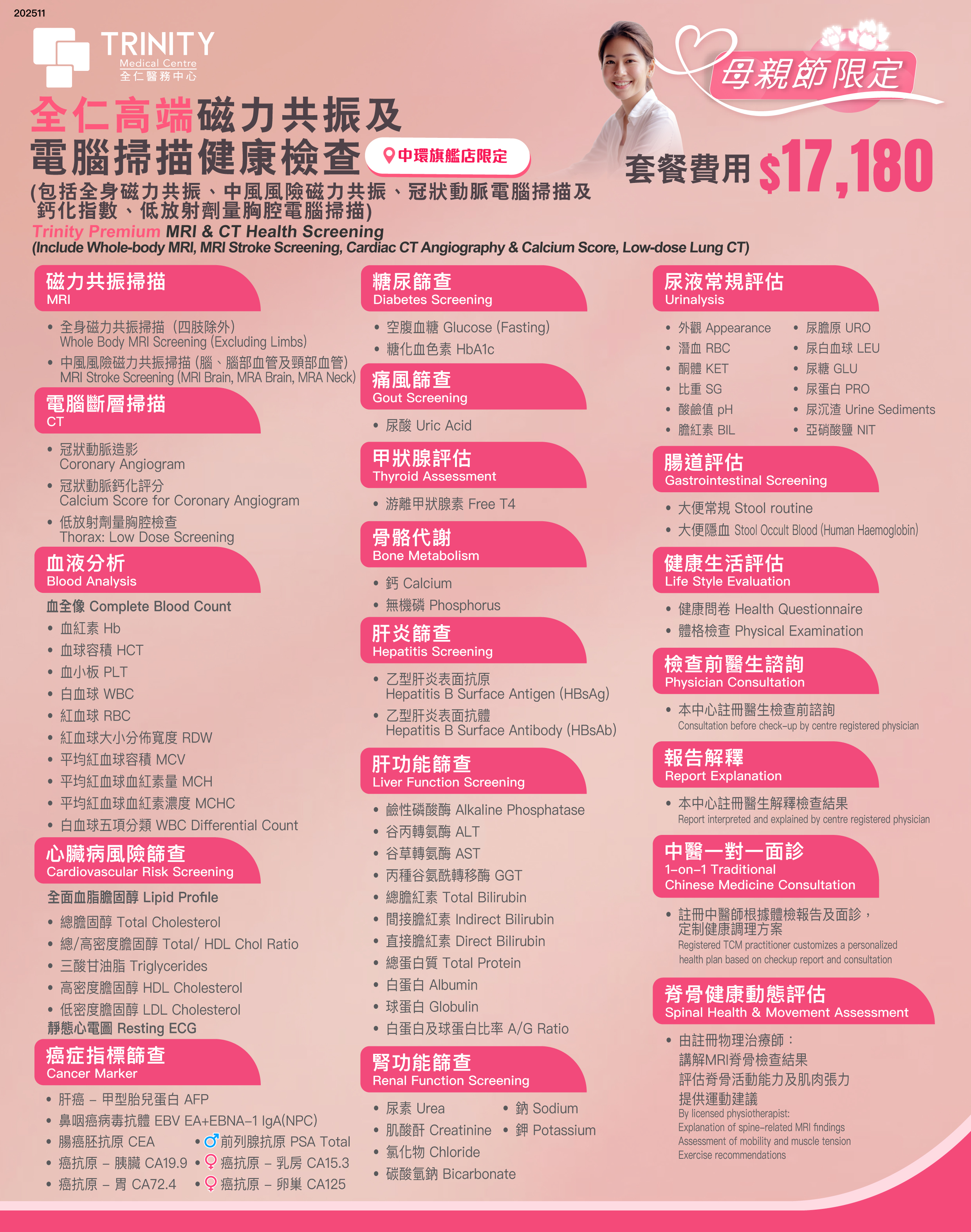
Health Check-up Plan Details:
1
Advanced Imaging
Magnetic Resonance Imaging (MRI)
- Whole Body MRI Screening (Excluding Limbs)
- Brain (Plain)
- MRA Brain (Plain)
- Brain (Plain)
Computed Tomography (CT)
- Coronary Angiogram
- Calcium Score for Coronary Angiogram
- Thorax: Low Dose Screening
2
Highlight Items
Cancer Marker Screening
- AFP
- CEA
- CA19.9
- CA72.4
- EBV EA+EBNA-1 IgA (NPC)
- PSA Total
- CA125
- CA15.3
3
Items
Cardiovascular Risk Screening
Hepatitis Screening
- Hepatitis B Surface Antigen (HBsAg)
- Hepatitis B Surface Antibody (HBsAb)
Liver Function Screening
- AST
- ALT
- Alkaline Phosphatase
- GGT
- Total Bilirubin
- Direct Bilirubin
- Indirect Bilirubin
- Total Protein
- Albumin
- Globulin
- A/G Ratio
Renal Function Screening
- Urea
- Creatinine
- Sodium
- Potassium
- Chloride
- Bicarbonate
Urinalysis
- Appearance
- RBC
- KET
- SG
- pH
- BIL
- URO
- LEU
- GLU
- PRO
- Urine Sediments
- NIT
Gastrointestinal Screening
- Stool Occult Blood (Human Haemoglobin)
- Stool routine
Life Style Evaluation
- Health Questionnaire
- Physical Examination
Doctor Consultation
- Consultation before check-up by centre registered doctor
Report Explanation
- Report interpreted and explained by centre registered physician
1-on-1 Traditional Chinese Medicine Consultation
- Registered TCM practitioner customizes a personalized health plan based on checkup report and consultation
Please make an appointment immediately, let us help you fully understand your health risks and provide corresponding health management advice.
Health Checkup Comparison
With increasing health awareness,Magnetic Resonance Imaging (MRI) and Computed Tomography (CT Scan) are essential tools for health screening. Ranging from standard whole-body MRI to advanced options incorporating low-dose lung CT and coronary CT angiography, to comprehensive plans including brain and neck vessel MRI, these three tailored plans provide precise diagnostics based on individual health needs and risks, ensuring early disease detection and protecting your well-being.
| Package |
Basic
|
Advanced
|
Comprehensive
|
| Features |
Whole-body MRI scans key areas (head, heart, lungs, liver, kidneys, spine) to detect tumors, organ issues, disc herniation, breast tissue changes, and microcalcifications, identifying disease risks |
Besides whole-body MRI, Low-dose Lung CT evaluates lung health and cancer risk, while coronary CT angiography assesses cardiovascular status, detecting occlusion risks to prevent heart attacks |
Besides whole-body MRI, Low-dose Lung CT, and coronary CT, brain and neck vessel MRI scans assess brain, cerebral, and neck vasculature to detect stenosis and prevent stroke |
| Recommended People |
Individuals over 30 with high stress levels are advised to undergo a comprehensive health checkup to monitor their health |
Suitable for monitoring heart, lung, cancer risks, family history, or smokers |
Suitable for monitoring heart, brain, lung health, cancer risk, family history, smoking, past mini-strokes, or comprehensive screening |
| Whole-body MRI |
|
|
|
| Low-dose Lung CT (LDCT) |
|
|
|
| Cardiac CT Angiography (CTCA) |
|
|
|
| MRI Stroke Screening |
|
|
|
| 3D Mammography |
|
|
|
|
Learn More |
Learn More |
Learn More |
FAQ
Question 1: Why should I choose a combined MRI and CT scan instead of individual examinations?
The reason for choosing a combined MRI and CT scan rather than individual examinations lies in their comprehensive and precise nature. MRI excels in imaging soft tissues, clearly revealing early tumors, inflammation, and degenerative diseases, while CT scans are known for their rapid scanning and high-resolution images, making them particularly suitable for cardiovascular and skeletal evaluations. The combination of both modalities provides a more thorough diagnostic result, ensuring a complete assessment of overall health from head to toe. This comprehensive approach not only facilitates the early detection of potential health issues but also allows for timely treatment, making it an ideal choice for annual health check-ups.
Question 2: What early health issues can a combined MRI and CT scan detect?
A combined MRI and CT scan can early detect various health issues, including but not limited to:
- tumors and cancers: MRI can detect small tumors, while CT scans are adept at identifying abnormalities in the lungs, liver, and other areas.
- cardiovascular diseases: CT coronary angiography can assess coronary artery plaque and calcification levels, enabling early detection of heart disease risk.
- brain disorders: MRI’s 3D neuroimaging technology can accurately diagnose cerebrovascular diseases and neurodegenerative conditions.
- degenerative diseases: Conditions such as arthritis and disc degeneration can be clearly visualized with MRI, providing detailed images of soft tissue.
- metabolic abnormalities: Comprehensive blood analysis can detect indicators such as blood sugar, cholesterol, and gout, allowing for early identification of metabolic syndrome.
This integrated examination approach, utilizing high-sensitivity imaging technology and thorough blood analysis, provides early warnings for your health, assisting in the prevention and timely treatment of potential diseases.
Question 3: Is low-dose CT screening suitable for long-term smokers?
Yes, low-dose CT screening is particularly suitable for long-term smokers or individuals at high risk for lung cancer. This examination employs low radiation dose technology to minimize exposure while providing high-resolution images that can detect small pulmonary lesions early, making it an ideal tool for lung cancer screening. The procedure is non-invasive and quick, requiring no incisions or insertions, thereby maximizing patient comfort and making it the preferred choice for annual check-ups for long-term smokers.
Question 4: Is MRI scanning safe? What are its advantages?
MRI scanning is a very safe examination method, posing no radiation hazards, making it particularly suitable for patients requiring multiple assessments. Its primary advantages include:
- High-resolution images: The fully digital system provides exceptional image quality, allowing for clear visualization of subtle tissue changes.
- 3D neuroimaging: Precise diagnosis of cerebrovascular and neurodegenerative diseases.
- Soft tissue imaging: Excellent visualization of muscles, ligaments, and joints, enabling early detection of injuries or degeneration.
- Non-invasive: Safe examination of vascular abnormalities without the need for contrast agents, reducing examination risks.
- Early tumor diagnosis: Capable of detecting small tumors that traditional examinations may miss, providing opportunities for early treatment.
These advantages make MRI the preferred tool for detecting diseases across various body systems, especially for clients focused on soft tissue and brain health.
Question 5: Is MRI scanning suitable for individuals with metal implants?
Generally, MRI scanning is not suitable for patients with certain types of metal implants, particularly those containing iron. This is due to the strong magnetic fields used in MRI, which can potentially cause metal implants to move or heat up. However, many modern metal implants (such as those made of titanium) are MRI-compatible. Patients should consult their physician or technician before undergoing scanning to confirm the safety of their implants. If there are any concerns, the doctor will recommend the appropriate examination method based on the specific situation.
Question 6: How Does MRI Assist in Screening for Stroke Risk?
Magnetic Resonance Imaging (MRI) is a high-resolution imaging technique that provides detailed visualization of brain vessels, tissues, and blood flow, aiding in the identification of stroke risk. By detecting narrowed blood vessels, aneurysms, or abnormal blood flow, physicians can assess the likelihood of a stroke and identify early abnormalities such as ischemic changes or microbleeds. MRI is radiation-free and non-invasive, making it an ideal option for regular screening in high-risk groups, enabling early detection and the development of preventive strategies.
Question 7: Who Is Suitable for MRI Stroke Risk Screening?
MRI stroke risk screening is particularly recommended for individuals with a family history of stroke, hypertension, diabetes, high cholesterol, smoking habits, or cardiovascular disease. Additionally, those aged 50 and above, individuals experiencing chronic stress, or those with a sedentary lifestyle are advised to undergo this examination. MRI offers precise detection of potential brain issues, empowering high-risk individuals to implement lifestyle modifications or medical interventions early, thereby reducing the likelihood of stroke.
Centre Address
Excellent Locations, Cozy Environment, Considerate Service
All Trinity Medical Centres are located near major MTR stations and have wheelchair access, making it convenient and easy to reach. We also provide private rooms and a ladies’ area to ensure comfort and privacy.
Trinity Medical Centre (Central)
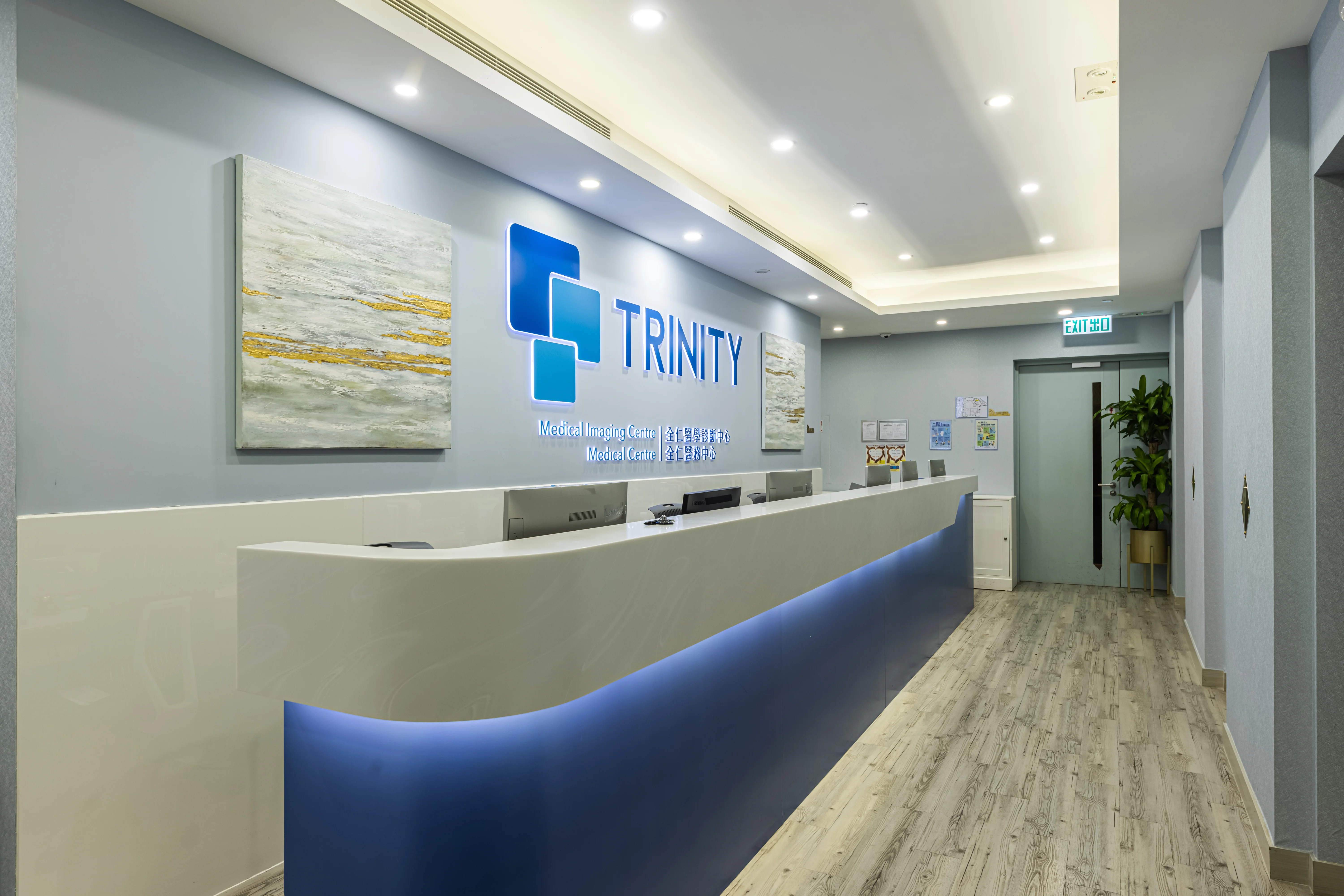
- Address:22/F, Entertainment Building, 30 Queen’s Road Central
- Opening Hours:
- Monday to Friday: 09:00-18:00
- Saturday: 09:00-17:00
- Sunday
- MRI Service: 09:00-17:00
- CT Service: 09:00-13:00
- Sunday & Public Holiday: Closed
Service:
Magnetic Resonance Imaging (MRI) |Computerized Tomography (CT)|
2D/3D Mammography (Mammogram) |Ultrasound Scan |X-ray | DEXA | Treadmill | Lab Test
Map